
Ghumura: The Resonating Soul of Kalahandi and the Cultural Heritage of Odisha
Introduction
Among the rich and vibrant folk traditions of Odisha, Ghumura occupies a unique and revered position. More than a mere dance form, Ghumura is a living expression of history, cultural memory, martial valor, and collective identity. Deeply rooted in the soil of western Odisha, particularly in the districts of Kalahandi, Nuapada, Nabarangpur, Koraput, and Bolangir, Ghumura represents the rhythmic heartbeat of a civilization that has preserved its traditions through centuries of social and political transformations.
Often described as one of the most ancient folk dances of India, Ghumura combines vigorous dance movements, martial postures, colorful costumes, and the powerful resonance of the Ghumura drum. The dance embodies the spirit of courage, devotion, celebration, and communal harmony. It serves as a bridge connecting the tribal, rural, and classical cultural streams of Odisha.
Today, Ghumura has emerged not only as a regional cultural symbol but also as an emblem of Odia identity, gaining recognition at national and international cultural festivals. Its grandeur, aesthetic richness, and historical significance continue to fascinate scholars, artists, and cultural enthusiasts alike.
* Historical Origins of Ghumura
The origins of Ghumura remain a subject of scholarly debate. Historians and folklorists trace its roots to ancient military traditions practiced in the Mahakantara region, which broadly corresponds to present-day Kalahandi and its surrounding areas. The dance is believed to have evolved from martial exercises performed by warriors before entering the battlefield.
Archaeological evidence suggests the antiquity of the tradition. Sculptural depictions resembling Ghumura drummers have been identified in ancient temples of Odisha, indicating that the instrument and associated performance traditions existed centuries ago. Some scholars associate Ghumura with the military culture of the ancient kingdoms of South Kosala and Kalinga.
The celebrated historian Hermann Kulke observed that folk traditions such as Ghumura played a crucial role in preserving regional identities and cultural continuity in Odisha. Similarly, Anncharlott Eschmann highlighted the significance of western Odisha’s folk traditions in shaping the broader cultural landscape of the state.
Local legends narrate that Ghumura was originally used to inspire soldiers during warfare. The booming sound of the drum instilled courage among warriors and intimidated enemies. Over time, the martial practice gradually transformed into a ceremonial and festive dance performed during religious festivals, harvest celebrations, and social gatherings.
The Ghumura Instrument
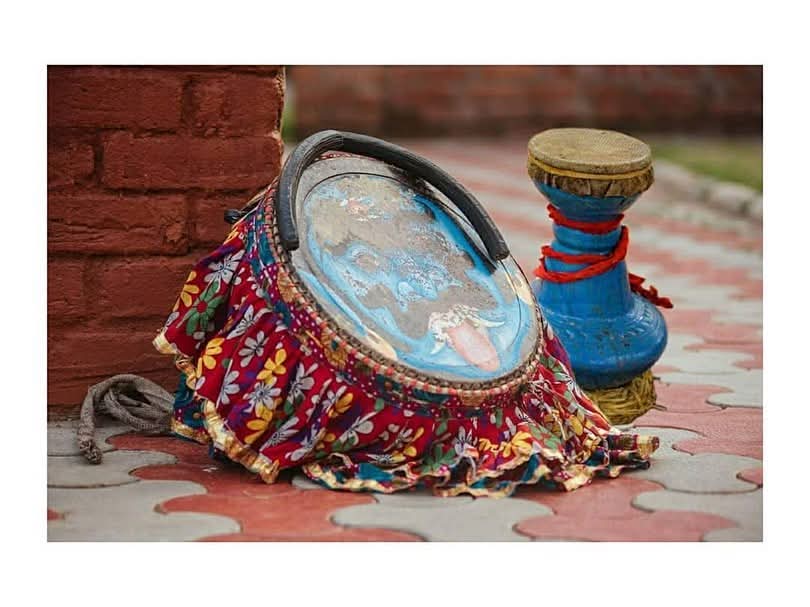
The heart of the performance is the Ghumura itself—a distinctive percussion instrument after which the dance is named.The Ghumura drum is shaped like a pitcher or pot with a broad circular opening covered by animal hide. It is suspended from the shoulders or waist of the performer and played while dancing. Unlike many traditional drums that are merely musical accompaniments, the Ghumura functions simultaneously as a musical instrument and a symbolic cultural artifact.
The instrument produces deep, resonant sounds capable of carrying over considerable distances. The rhythmic patterns generated by the Ghumura create a powerful atmosphere that energizes both performers and spectators.
Traditionally, the drum was crafted by local artisans using indigenous materials. The making of a Ghumura itself is considered an art requiring specialized knowledge passed down through generations.
## Performance Style and Choreography
Ghumura dance is characterized by extraordinary vigor, synchronization, and discipline. Performers move in coordinated formations while continuously beating the drum attached to their bodies.
The choreography includes:
* Circular formations.
* Semi-circular movements.
* Martial postures.
* Rapid footwork.
* Rhythmic body movements.
* Symbolic battle formations.
The dancers often perform in groups ranging from ten to thirty individuals. Their movements reflect collective harmony and physical endurance. The dance demands remarkable stamina because performers simultaneously dance, maintain formation, and play the heavy drum.
One of the most captivating aspects of Ghumura is its dynamic rhythm. The tempo gradually intensifies, creating a sense of excitement and emotional engagement. The synchronized movements of dancers generate a visual spectacle that captivates audiences.
The performance is often accompanied by vocal chants and traditional instruments such as:
* Mahuri
* Nishan
* Tasa
* Dhol
* Jhanja
Together, these instruments create a rich and powerful musical ensemble that enhances the grandeur of the performance.
Costumes and Aesthetic Beauty
The visual appeal of Ghumura is one of its most striking features. Performers wear elaborate traditional attire that reflects the cultural heritage of western Odisha.
The costume generally includes:
* Brightly colored turbans.
* Decorative headgear.
* Traditional dhotis.
* Waistbands.
* Ornaments made of beads and shells.
* Peacock feathers and floral decorations.
The vibrant costumes symbolize festivity, prosperity, and cultural pride. The visual harmony between costume, movement, and music contributes significantly to the artistic excellence of the performance.
The dancers often decorate themselves with traditional motifs representing local beliefs, folklore, and heroic traditions. Their appearance transforms the performance into a living cultural tableau that reflects the collective identity of the region.
Ghumura and Martial Heritage
One of the most distinctive characteristics of Ghumura is its martial essence. Unlike many folk dances primarily associated with entertainment, Ghumura retains traces of its warrior origins.
Several dance sequences imitate:
* Military drills.
* Battlefield movements.
* Defensive formations.
* Strategic advances.
* Heroic gestures.
The vigorous body movements and disciplined formations suggest a historical connection with military training practices. Scholars often classify Ghumura as a folk martial dance because it preserves symbolic elements of warfare within a performative framework.
The martial dimension of Ghumura also reflects the historical experiences of the people of western Odisha, who frequently defended their territories against external invasions and political upheavals.
Religious and Cultural Significance
Although Ghumura possesses martial roots, it also holds profound religious significance. The dance is closely associated with the worship of various local deities and folk traditions.
In Kalahandi, Ghumura performances are integral to numerous festivals and rituals dedicated to:
* Goddess Manikeswari.
* Goddess Lankeswari.
* Stambheswari.
* Village guardian deities.
* Agricultural celebrations.
During these occasions, Ghumura serves as an offering of devotion and gratitude. The rhythmic performance is believed to invoke divine blessings and promote communal well-being.
The dance also functions as a medium of cultural transmission. Through songs and performances, communities preserve historical narratives, moral values, myths, and local traditions.
Ghumura and the Cultural Identity of Kalahandi
No discussion of Ghumura can be complete without acknowledging its intimate relationship with Kalahandi. Often misunderstood solely through narratives of poverty and underdevelopment, Kalahandi possesses an extraordinarily rich cultural heritage.
Ghumura stands as one of the strongest symbols of this heritage. It represents the resilience, creativity, and cultural sophistication of the people of the region. The dance challenges stereotypes by showcasing Kalahandi’s vibrant artistic traditions and historical depth.
For generations, Ghumura has served as a source of regional pride. Cultural organizations, educational institutions, and community groups actively promote the dance as a marker of local identity.
Many scholars regard Ghumura as the cultural ambassador of Kalahandi, carrying the voice of the region to audiences across India and beyond.
Contemporary Relevance and Global Recognition
In recent decades, Ghumura has gained increasing recognition at state, national, and international levels. Cultural troupes regularly participate in:
* Republic Day celebrations.
* National folk festivals.
* International cultural exchanges.
* University cultural events.
* Government-sponsored heritage programs.
The Government of Odisha and various cultural organizations have undertaken initiatives to preserve and promote the tradition. Documentation projects, training camps, and research studies have contributed to safeguarding this valuable heritage.
The inclusion of Ghumura in academic discussions on folk culture has further enhanced its visibility. Researchers increasingly acknowledge its significance as a repository of historical memory, social values, and indigenous knowledge systems.
Yet challenges remain. Urbanization, changing lifestyles, and declining interest among younger generations pose threats to traditional performance practices. Sustained efforts are required to ensure the continuity of the art form.
Preservation and Future Prospects
The preservation of Ghumura requires collective action involving government institutions, scholars, artists, and local communities.
Important measures include:
* Establishing dedicated Ghumura academies.
* Supporting traditional artists financially.
* Including Ghumura in educational curricula.
* Encouraging youth participation.
* Documenting oral histories and performance traditions.
* Promoting research and publications.
Digital platforms also offer new opportunities for preserving and disseminating Ghumura. Online archives, documentaries, and virtual performances can help introduce the tradition to global audiences.
Recognition of Ghumura as an important element of India’s intangible cultural heritage would further strengthen conservation efforts and provide greater visibility to the art form.
* Conclusion
Ghumura is far more than a folk dance; it is a cultural chronicle of western Odisha, a symbol of collective memory, and a living testimony to the artistic genius of its people. Its powerful rhythms echo the valor of ancient warriors, the devotion of local communities, and the enduring spirit of Odisha’s cultural heritage.
As the resonant beats of the Ghumura drum continue to reverberate across villages, towns, and festival grounds, they remind us of the importance of preserving our traditional arts in an age of rapid modernization. Ghumura stands today as a proud emblem of Kalahandi and Odisha—a vibrant cultural treasure that deserves continued celebration, scholarly attention, and institutional support.
In safeguarding Ghumura, we preserve not merely a dance but an entire worldview shaped by history, faith, community, and artistic excellence. The enduring resonance of Ghumura will continue to inspire future generations, ensuring that the cultural soul of Kalahandi remains alive for centuries to come.
Dushmanta Kumar Panda
Senior Advocate and Researcher
At / Po – Junagarh , Kalahandi – 766014
Contact – +91 9114939329 / +91 9437789629
Gmail – dkpanda68@gmail.com
:: References
1. Das, J.P. *The Culture Heritage of Odisha*. New Delhi: Aryan Books International.
2. Eschmann, Anncharlott, Kulke, Hermann & Tripathi, G.C. *The Cult of Jagannath and the Regional Tradition of Orissa*. New Delhi: Manohar Publishers.
3. Mohapatra, Sitakant. *Folk Culture of Odisha*. Bhubaneswar.
4. Mishra, Nabin Kumar. *Tribal and Folk Culture of Odisha*. New Delhi.
5. Government of Odisha, Department of Odia Language, Literature and Culture. Reports on Ghumura and Folk Heritage.
6. Behera, Maguni Charan. *Cultural Heritage of Odisha*. New Delhi: Concept Publishing.
7. Kalahandi District Gazetteer. Government of Odisha.
8. Panda, Siddharth Saswat. *Mahakantaraka: A Journey of Ancient Harritage and Culture of Kalahandi*. Paschima Publications, 2025